
Perimenopause and Your Skin: What Changes, and Why
Dryness, new sensitivity, adult breakouts, a face that suddenly looks tired — hormonal shifts in your forties can show up on your skin long before your periods stop.
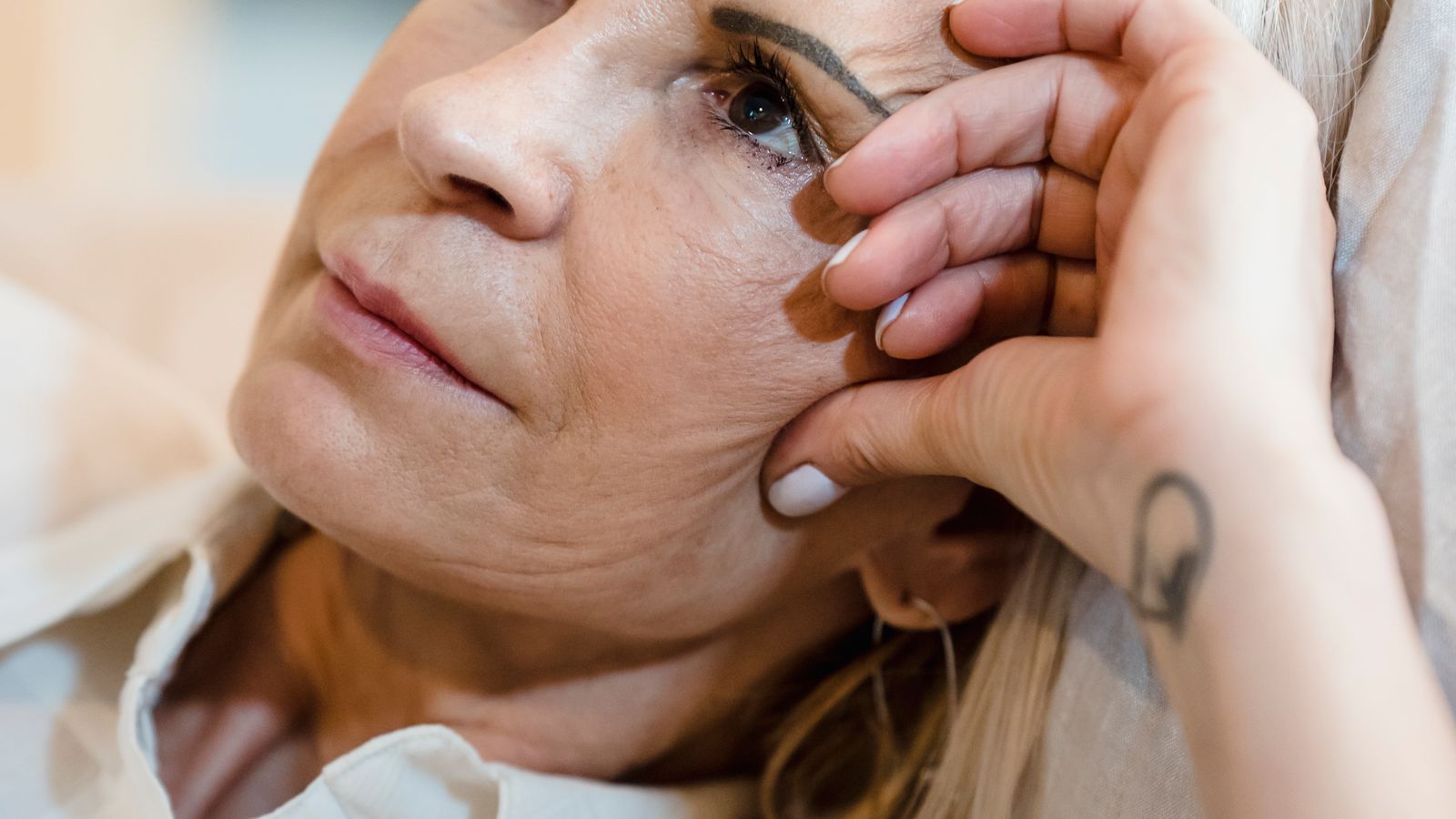
Photo: Pexels
Key takeaways
- Perimenopause — the years before periods stop — commonly starts in your mid-forties and can last several years.
- Falling oestrogen is linked to lower skin collagen, more dryness and slower healing.
- Many women notice sensitivity, itching or adult acne during this time.
- Gentle, barrier-supporting skincare helps; HRT and other treatments are a conversation to have with your doctor.
Most conversations about menopause focus on hot flushes. But for many women, the first sign that something is changing is in the mirror: skin that feels tight by lunchtime, a moisturiser that suddenly stings, or spots along the jaw for the first time since school.
What perimenopause is
Perimenopause is the stage when hormone levels start to fluctuate and fall, before periods stop altogether. It usually begins in a woman’s mid-forties, though it can start earlier, and symptoms can continue for several years.1 Skin changes are listed among the common symptoms, alongside sleep problems, mood changes and irregular periods.
Why your skin changes
Oestrogen helps skin hold on to moisture and supports the production of collagen, the protein that keeps it firm. As levels fall, collagen declines: an often-cited study found that skin collagen content dropped considerably in the years after menopause, and that the decline tracked time since menopause rather than age alone.2
The practical effects many women report include:3
- Dryness and itching, as the skin barrier holds less water.
- Increased sensitivity to products you have used for years.
- Thinner, less elastic skin that bruises or marks more easily.
- Adult acne, as the balance between oestrogen and androgens shifts.
- Slower healing of cuts and blemishes.
What helps
Rebuild the barrier first. Swap foaming cleansers for a cream or milk cleanser, use lukewarm water, and moisturise straight after washing while skin is still slightly damp. Look for fragrance-free products with glycerin, ceramides or hyaluronic acid.
Simplify actives. If your skin is reactive, pause exfoliating acids and introduce one active at a time. Retinoids can still be useful, but start more slowly than you would have at 30.
Protect daily. Thinner skin is more vulnerable to sun damage, so a broad-spectrum SPF 30 or higher matters even more now.
Your skin is not failing. It is responding to a real hormonal change — and it deserves a routine that responds too.
When to talk to a doctor
If skin changes come with other symptoms — sleep disruption, low mood, flushes, joint aches — it is worth discussing perimenopause with your GP or doctor. Guidelines recommend that women over 45 with typical symptoms can usually be diagnosed on symptoms alone, without blood tests, and offered treatment options including hormone replacement therapy where appropriate.4 Persistent itching, rashes or acne that does not settle should also be checked.
Sources
- NHS. Menopause: symptoms. nhs.uk.
- Brincat M, et al. Sex hormones and skin collagen content in postmenopausal women. BMJ. 1983;287:1337–1338.
- British Menopause Society / Women’s Health Concern. Menopause and the skin (factsheet). womens-health-concern.org.
- NICE. Menopause: identification and management (NG23). nice.org.uk.