
Minoxidil for Women: How It Works and What to Expect
Minoxidil is one of the few hair-loss treatments with solid evidence for women. But the first months can be confusing — including a phase of extra shedding. Here is how to use it and what to expect.
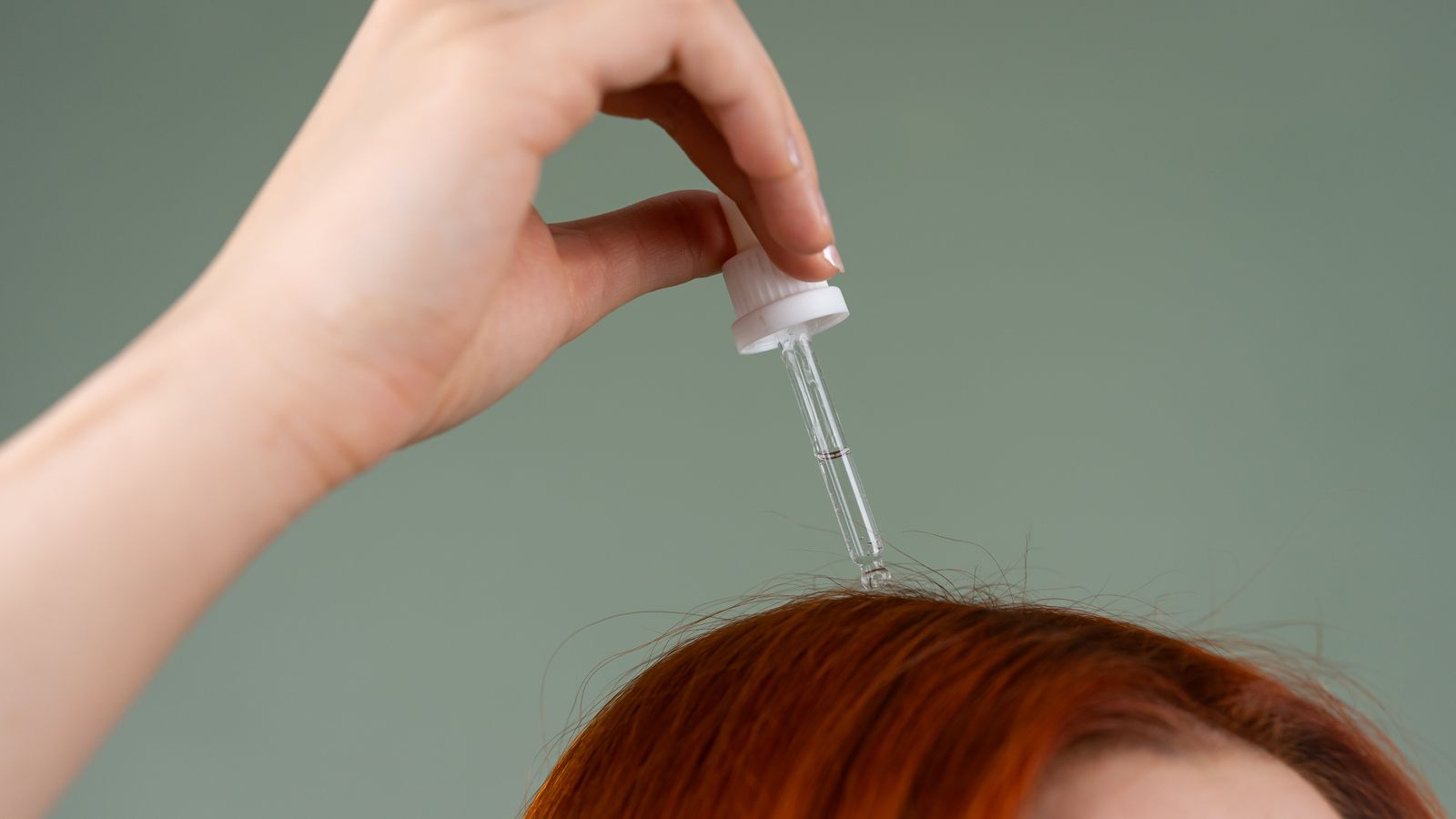
Photo: Pexels
Key takeaways
- Topical minoxidil is an approved, evidence-based treatment for female pattern hair loss.
- Many people shed more hair in the first two to eight weeks; this usually settles.
- Results take at least four to six months; continue for a year to judge it properly.
- It only works while you use it, and it is not suitable in pregnancy or breastfeeding.
Female pattern hair loss usually shows as a widening parting and thinner hair on the top of the head, while the hairline stays in place. It is common, especially after menopause. Minoxidil is one of the best-studied treatments for it.
What the evidence says
A Cochrane review of treatments for female pattern hair loss found that topical minoxidil produced a meaningful improvement in hair regrowth compared with placebo.1 It does not work for everyone, and it is better at slowing loss and thickening existing hairs than at regrowing hair on completely bald areas.
How it works
Minoxidil was first developed as a blood-pressure medicine. When applied to the scalp, it appears to lengthen the growth phase of the hair cycle and enlarge shrinking hair follicles, so hairs grow thicker and longer.2
How to use it
- Topical minoxidil comes as a liquid or foam, usually at 2% or 5%. The 5% foam is licensed for women in many countries.
- Apply it to a dry scalp, not to the hair, once or twice a day as directed.
- Wash your hands afterwards and avoid it running onto your face or forehead.3
The shedding phase
Many people notice more hair falling out in the first two to eight weeks. This happens because older hairs are pushed out to make way for new growth. It is a sign the treatment is working, and it usually stops — so do not give up.
Judge minoxidil at six months, not six weeks. Taking monthly photos in the same light helps.
Side effects
The most common are scalp itching, dryness and flaking (often from the alcohol in liquid formulas — the foam may suit you better), and unwanted fine hair growth on the face, which is more likely with higher strengths and usually reverses when you stop.2
Oral minoxidil
Some dermatologists now prescribe low-dose oral minoxidil as an off-label treatment. A review found it can be effective and generally well tolerated, but it needs medical supervision because of possible effects on blood pressure, heart rate, fluid retention and facial hair.4
Important to know
- It only works while you use it; hair gained will gradually shed within months of stopping.
- Do not use it if you are pregnant or breastfeeding.
- It is important to find the cause of hair loss first. Low iron, thyroid problems and other conditions can cause thinning. Read our guide to thinning hair in your 40s and low iron in women.
Sources
- van Zuuren EJ, et al. Interventions for female pattern hair loss. Cochrane Database of Systematic Reviews. 2016;(5):CD007628.
- American Academy of Dermatology. Hair loss: diagnosis and treatment. aad.org.
- NHS. Hair loss. nhs.uk.
- Randolph M, Tosti A. Oral minoxidil treatment for hair loss: a review of efficacy and safety. Journal of the American Academy of Dermatology. 2021;84(3):737–746.