
Are LED Face Masks Worth It? What the Studies Show
Red light for wrinkles, blue light for spots — LED masks promise clinic results at home. Here is what the research actually supports, what it does not, and how to use one safely.
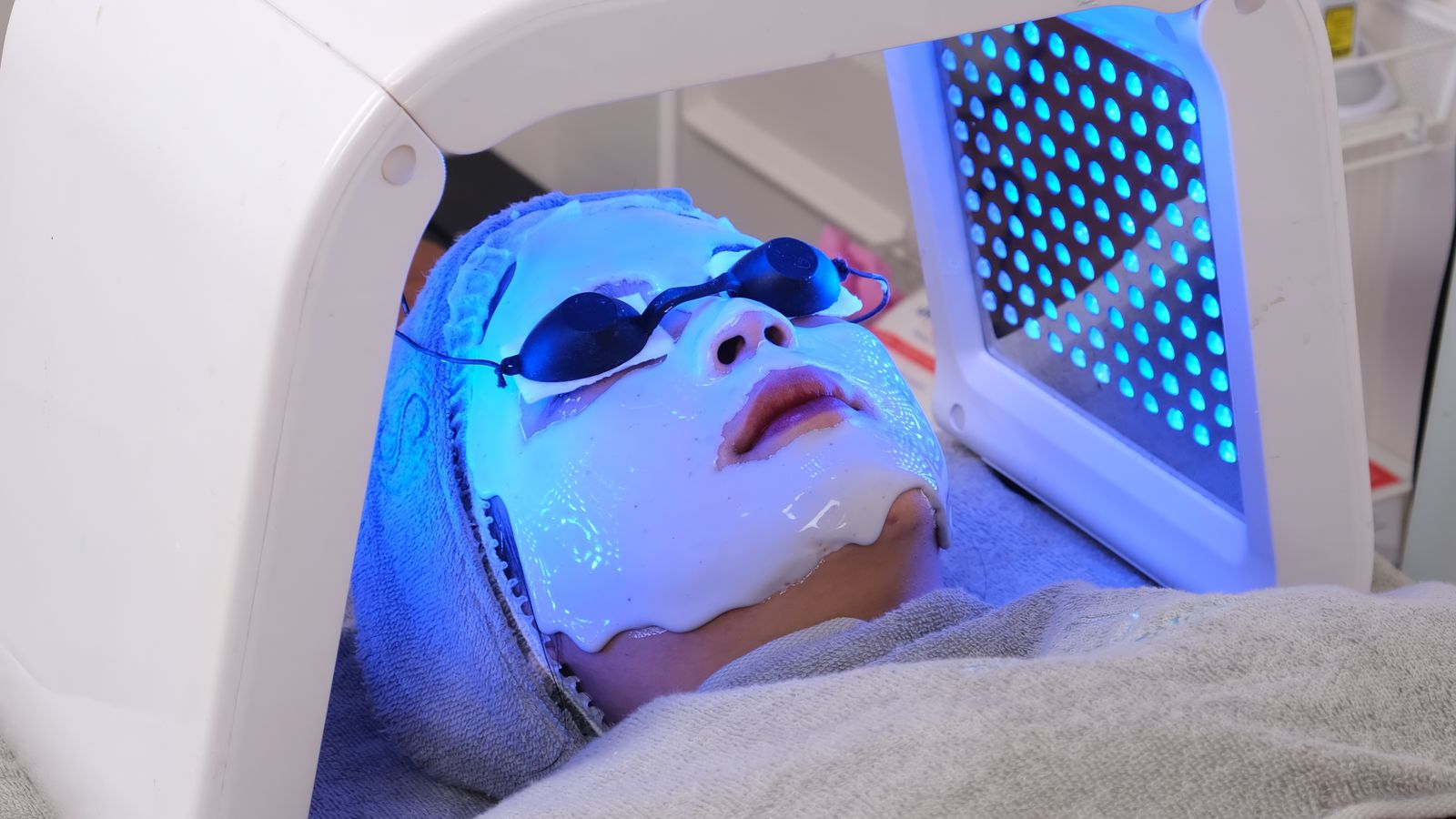
Photo: Pexels
Key takeaways
- Small clinical studies suggest red and near-infrared light may modestly improve fine lines and skin texture.
- Blue light has some evidence for mild to moderate acne, but results are modest and less reliable than standard treatments.
- Most studies are small and short, and use clinic devices that may be more powerful than home masks.
- Protect your eyes, and avoid LED if you take light-sensitising medicines or have certain eye conditions.
LED masks have moved from dermatology clinics into bathrooms, with prices that range from modest to several hundred pounds. They use light-emitting diodes at specific wavelengths, with no heat and no downtime. But how good is the evidence?
Red and near-infrared light: for ageing skin
Red (around 630–660 nm) and near-infrared (around 830 nm) light are thought to act on cells’ energy-producing structures, which may encourage collagen production and reduce inflammation.2
In one controlled trial, people treated twice a week for 30 sessions with red or near-infrared light showed improvements in skin complexion and feeling, and measured improvements in roughness and collagen density compared with controls.1 Other studies have found similar modest benefits.
What that means: a subtle improvement in texture and fine lines is plausible with consistent use. It will not match retinoids, injectables or energy-based treatments.
Blue light: for spots
Blue light (around 415 nm) targets the bacteria involved in acne. Reviews find it can improve mild to moderate inflammatory acne, but results vary and are generally less effective than standard treatments such as topical retinoids and benzoyl peroxide.3 It does little for blackheads, cysts or scarring.
LED is best thought of as a gentle extra — not a replacement for sunscreen, retinoids or proven acne treatments.
The catch
- Small studies. Most trials are small, short and often industry-funded.
- Clinic vs. home. Studies usually use clinic panels; home masks may deliver lower energy, and devices vary widely.
- Consistency. Benefits require regular use — often several times a week for months.
Safety
LED devices are generally considered low risk.4 To use one safely:
- protect your eyes, especially with bright or blue light — use goggles if supplied;
- do not use it if you take medicines that make you sensitive to light, or have a light-sensitive condition;
- ask an eye doctor first if you have an eye condition, and a doctor if you have a history of skin cancer;
- follow the time limits in the instructions.
Is it worth it?
If your budget and skincare basics are already covered — daily sunscreen, a retinoid, moisturiser — and you like the ritual, an LED mask may give a modest boost. If you are choosing where to spend money, those basics will do more. See retinol vs. tretinoin and adult acne.
Sources
- Wunsch A, Matuschka K. A controlled trial to determine the efficacy of red and near-infrared light treatment in patient satisfaction, reduction of fine lines, wrinkles, skin roughness, and intradermal collagen density increase. Photomedicine and Laser Surgery. 2014;32(2):93–100.
- Avci P, et al. Low-level laser (light) therapy (LLLT) in skin: stimulating, healing, restoring. Seminars in Cutaneous Medicine and Surgery. 2013;32(1):41–52.
- Pei S, et al. Light-based therapies in acne treatment. Indian Dermatology Online Journal. 2015;6(3):145–157.
- US Food and Drug Administration. Light-emitting diode (LED) devices: general information. fda.gov.